Is Guinness Good for You – Nutrition Facts, Benefits and Risks
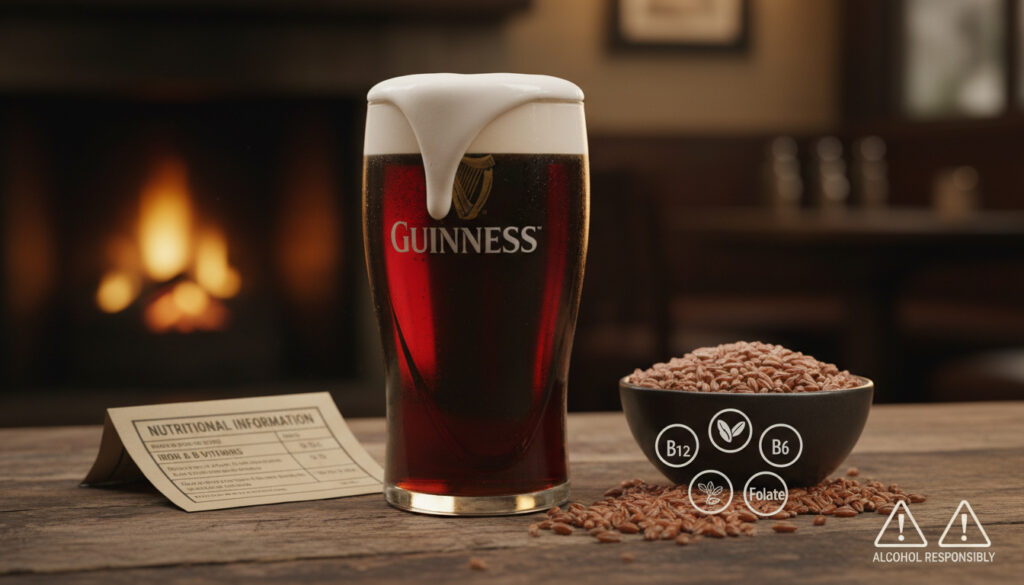
Guinness carries a reputation that precedes the first pour. The Irish stout’s dark, creamy profile has long been associated with fortification and vitality, fueling decades of speculation about hidden health benefits.
Science offers a more measured perspective. While the 4.2-4.3% ABV beverage does contain trace nutrients including B vitamins and antioxidants, medical experts emphasize that alcohol-related risks generally outweigh these modest nutritional gains for most consumers.
Understanding the distinction between folklore and physiology requires examining the actual nutritional composition, the validity of historical health claims, and the specific contexts in which consumption might pose particular dangers.
Does Guinness Have a Lot of Iron?
Iron Myth
Historical claims suggested therapeutic iron levels. Laboratory analysis confirms trace amounts insufficient for treating anemia.
Caloric Profile
Approximately 200 kilocalories per pint, notably lower than many 5% ABV lagers exceeding 220 kilocalories.
Vitamin Content
Contains B vitamins, particularly folate, at higher concentrations than many imported beers or wine.
Silicon Presence
Provides silicon minerals associated with bone health, hair strength, and nail integrity.
- Iron reality: The “iron tonic” reputation is a myth; beer iron is poorly absorbed and clinically insignificant for treating deficiency.
- B vitamin advantage: Notably rich in folate compared to standard lagers and wine.
- Calorie comparison: Lower energy density than typical 5% alcohol by volume lagers due to reduced ABV.
- Mineral content: Contains silicon beneficial for bone mineral density.
- Antioxidant base: Derives polyphenols primarily from barley malt.
- Protein negligible: Contains only 0.002g protein per 100ml.
- Fat free: Zero fat content per standard serving measurements.
| Nutrient | Amount per 100ml | Notes |
|---|---|---|
| Calories | 35 kcal (148 kJ) | ~200 kcal per pint source |
| Alcohol by Volume | 4.2-4.3% | Lower than standard 5% lagers source |
| Carbohydrates | 3.0g | Moderate glycemic impact |
| Protein | 0.002g | Clinically negligible |
| Fat | 0.0g | Fat-free beverage |
| Iron | Trace | Insufficient for anemia treatment source |
| Folate (B9) | Present | Higher than many beers/wine USDA data |
| Silicon | Present | Supports bone health |
What Are the Health Benefits of Guinness?
Bone Density and Silicon Content
Research indicates moderate beer consumption correlates with increased bone mineral density. Guinness contains silicon derived from barley, a mineral essential for collagen formation in bone tissue. A 2021 review in Nutrients associated moderate intake with skeletal benefits, though researchers caution against conflating correlation with causation.
Cardiovascular Considerations
Preliminary studies suggest protective cardiovascular effects compared to lighter lagers. A 2021 Nutrients meta-analysis linked moderate beer consumption to reduced cardiovascular disease and mortality risk. However, these findings derive primarily from observational studies; randomized controlled trials remain necessary to establish definitive cardiac protection.
Gut Microbiome Support
The stout delivers substantial polyphenolic compounds, with 70-80% originating from barley including melanoidins formed during the roasting process. A 2022 study published in the Journal of Agricultural and Food Chemistry demonstrated improved gut bacteria diversity in subjects consuming both alcoholic and non-alcoholic versions, suggesting prebiotic effects independent of ethanol content.
The antioxidant compounds in Guinness function as prebiotics, potentially boosting beneficial gut bacteria and supporting immune function. Research confirms these effects persist in the non-alcoholic 0.0 variant, offering similar microbiome benefits without ethanol exposure.
Is Guinness Healthier Than Other Beers?
Nutritional Comparison with Lagers
Direct comparison with standard American lagers such as Budweiser reveals distinct nutritional profiles. Guinness offers richer B vitamin concentrations, superior antioxidant levels, and dietary fiber content absent in many filtered lagers. The 4.2-4.3% ABV contributes to its approximately 200 kilocalorie per pint content, compared to 220+ kilocalories in typical 5% ABV alternatives.
Non-Alcoholic Alternatives
Guinness 0.0 retains the polyphenol and silicon content of its alcoholic counterpart while eliminating ethanol-related risks. Studies confirm the non-alcoholic variant produces similar microbiome improvements and antioxidant delivery, positioning it as a preferable option for individuals seeking stout flavor without alcohol’s metabolic burden.
Is Guinness Bad for You?
Pregnancy and Fetal Development
Medical consensus unequivocally advises complete abstinence during pregnancy. No safe alcohol consumption threshold exists for fetal development; ethanol exposure risks fetal alcohol spectrum disorders regardless of beverage type or maternal tolerance.
Diabetes and Glycemic Control
The combination of carbohydrates and alcohol creates significant blood glucose management challenges. For individuals with diabetes, consumption spikes blood sugar levels while simultaneously risking delayed hypoglycemia, rendering the beverage unsuitable for glycemic control protocols.
Weight Management Considerations
Despite a filling mouthfeel that creates temporary satiety, the 200 kilocalorie per pint contribution accumulates rapidly. Regular consumption contributes to positive energy balance, particularly when combined with high-energy dietary choices such as Pakistani Shami Kebab Near Me – Authentic Spots and Recipe.
Pregnant women, individuals with diabetes, and those managing alcohol dependency should avoid Guinness entirely. The alcohol content poses specific dangers to fetal development, glycemic stability, and addiction recovery that outweigh any potential nutritional benefits.
Current health benefit claims rely predominantly on observational studies rather than randomized controlled trials. Confounding lifestyle factors may influence perceived benefits, and the beverage industry has historically exaggerated nutritional claims without official regulatory endorsement.
How Has the Perception of Guinness Changed Over Time?
-
Arthur Guinness signs the 9,000-year lease on the St. James’s Gate brewery in Dublin, establishing the stout’s production legacy.
-
Marketing campaigns and cultural folklore promote the “iron tonic” myth, suggesting the dark color indicates therapeutic mineral content beneficial for anemia.
-
Clinical studies systematically debunk iron therapeutic claims, confirming that beer iron is poorly bioavailable and insufficient for treating deficiency. For more information on this topic, you can refer to Kronenbourg 1664 Blanc pris.
-
Publication of comprehensive Nutrients review identifying moderate beer consumption’s association with reduced cardiovascular mortality.
-
Journal of Agricultural and Food Chemistry research confirms gut microbiome benefits from polyphenols in both alcoholic and non-alcoholic stout variants.
-
Launch of Guinness 0.0, shifting health discourse toward alcohol-free alternatives that retain nutritional compounds without metabolic risks.
What Do We Know for Certain About Guinness and Health?
Established Facts
- Contains 4.2-4.3% ABV and approximately 35 kilocalories per 100ml
- Provides B vitamins, notably folate, exceeding levels in many wines and lagers
- Contains silicon and polyphenols with prebiotic properties
- Iron content is trace and therapeutically insignificant
- Non-alcoholic variant delivers equivalent antioxidant benefits
Remaining Uncertainties
- Long-term health effects of moderate consumption require randomized controlled trials
- Individual metabolic variance affects alcohol processing and nutrient absorption
- Optimal consumption thresholds for specific health outcomes remain undefined
- Cardioprotective mechanisms require further mechanistic elucidation
Why Did the Guinness Health Myths Emerge?
The association between Guinness and medicinal benefits originated in the 20th century when the stout’s distinctive dark hue and rich texture suggested nutritional density. Marketing materials from previous decades explicitly positioned the beverage as a restorative tonic, particularly targeting convalescents and nursing mothers with claims of blood-building properties.
Cultural reinforcement perpetuated these assumptions. In the United Kingdom and Ireland, traditional prescribing practices occasionally included Guinness recommendations for anemia and post-operative recovery, creating a persistent public health misconception. The Glasgow to Edinburgh Train – Times, Fares and Stations Guide reflects similar cultural documentation of British Isles traditions, illustrating how regional practices become embedded in popular consciousness regardless of empirical validation.
Contemporary nutritional science has dismantled these claims while revealing authentic, if modest, biochemical benefits. The disparity between historical marketing and empirical evidence underscores the necessity of distinguishing cultural tradition from clinical recommendation when evaluating dietary choices.
What Do Experts Say About Guinness?
Moderate beer intake demonstrates association with lower cardiovascular disease and mortality risk, though these observations require confirmation through randomized controlled intervention trials.
— Nutrients Meta-Analysis, 2021
Both alcoholic and non-alcoholic beer consumption improves gut microbiome diversity, indicating prebiotic effects independent of ethanol content.
— Journal of Agricultural and Food Chemistry, 2022
Nutrition specialists emphasize that while Guinness contains measurable polyphenols and B vitamins, these compounds are readily available through non-alcoholic dietary sources including whole grains, fruits, and vegetables. Video analysis from nutritional biochemists confirms that relying on fermented beverages for micronutrient delivery introduces unnecessary alcohol-related risks.
Should You Drink Guinness for Health Benefits?
Guinness offers genuine nutritional components including B vitamins, silicon, and polyphenolic antioxidants, with the non-alcoholic 0.0 variant providing these benefits without ethanol’s metabolic costs. However, the risks associated with alcohol consumption—particularly for pregnant women, diabetics, and individuals managing weight—generally outweigh these modest nutritional advantages for regular consumers. Those seeking the specific flavor profile and antioxidant content might consider the zero-alcohol version, while others should view occasional consumption as a culinary choice rather than a health strategy.
Common Questions About Guinness and Health
Is Guinness zero alcohol good for you?
The 0.0 variant provides polyphenols and silicon without alcohol risks, offering gut health and antioxidant benefits similar to the alcoholic version while eliminating metabolic and developmental dangers.
Is Guinness good for pregnant women?
No. Medical consensus advises complete abstinence during pregnancy as no safe alcohol consumption threshold exists for fetal development.
Can Guinness help with anemia?
No. Despite historical marketing, the iron content is minimal and poorly absorbed, insufficient for treating iron-deficiency anemia.
How many calories are in a pint of Guinness?
Approximately 200 kilocalories per pint (568ml), which is lower than many 5% ABV lagers that exceed 220 kilocalories.
Is Guinness safe for diabetics?
Not recommended. The carbohydrate and alcohol content can spike blood sugar and interfere with glycemic control medications.
Does Guinness contain gluten?
Yes. Guinness is brewed from barley which contains gluten, making it unsuitable for individuals with celiac disease or gluten intolerance.
More related posts